By Valentia Tetteh
The Minister of State for Climate Change and Sustainability, Seidu Issifu, has called for climate considerations to become a mandatory component of all public infrastructure and development projects to strengthen Ghana’s resilience to climate change.
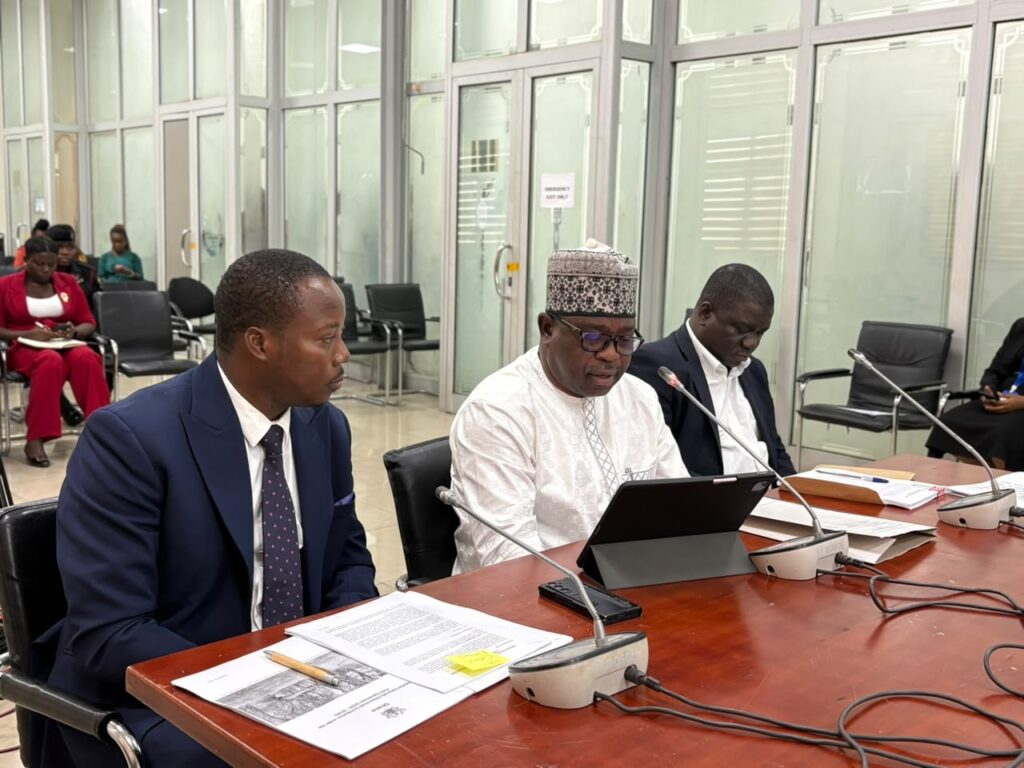
Appearing before Parliament’s Assurance Committee on Thursday, July 9, Mr Issifu said climate resilience must be embedded in the planning, design and implementation of national development projects.
“Every activity that we undertake must have a climate dimension. That is the way to minimise the shocks of climate change,” he said.
The Minister urged Parliament to scrutinise the climate implications of projects submitted for approval, arguing that such an approach would help reduce the country’s vulnerability to flooding and other climate-related disasters.
“Assuming the government brings a project to Parliament and Honourable Members ask, ‘What is the climate dimension of this project?’ then every project approved by Parliament will have to comply with climate requirements,” he stated.
According to Mr Issifu, integrating climate resilience into national development planning would not only reduce environmental risks but also improve Ghana’s ability to attract climate finance and generate carbon credits.
“Any project that is climate-compliant has the potential to generate carbon credits and also attract cheaper climate financing to support the government’s development agenda,” he explained.
The Minister said Ghana cannot completely eliminate flooding but can significantly reduce its impact by ensuring roads, buildings and other public infrastructure are designed to withstand changing climatic conditions.
“We cannot stop flooding entirely; it is difficult to do that. But we can contain its impact if we incorporate climate considerations into our development planning,” he noted.
Mr Issifu also stressed the importance of restoring degraded ecosystems and promoting locally led climate adaptation measures, particularly in communities affected by illegal mining and environmental degradation.
He maintained that adaptation strategies should be tailored to the unique challenges facing individual communities rather than adopting a one-size-fits-all approach.
“You cannot have one adaptation plan for every community. We should be promoting locally led adaptation so that the solutions become community-driven and sustainable,” he said.
The Minister reiterated that tackling climate change requires coordinated efforts across all sectors, adding that the government remains committed to strengthening climate governance while mobilising resources to support adaptation and mitigation initiatives nationwide.